
They talked about us:

Italy at its best
Discover the beauty of Italy, get insider tips and travel advice.
This is the start of a mysterious and fascinating trip: a voyage across more than 20 centuries of creativity through which art and history intertwine, telling the story of what human ingenuity has created through the ages.
This is the start of a mysterious and fascinating trip: a voyage across more than 20 centuries of creativity through which art and history intertwine, telling the story of what human ingenuity has created through the ages.
Here you can discover the incredible treasure that Italy holds, a true treasure trove of art, history, and unparalleled wonders. We are delighted to accompany you on a sensory and emotional journey through the most important tourist destinations, where art blends with nature, creating unforgettable experiences.
Discover our products designed for tourists


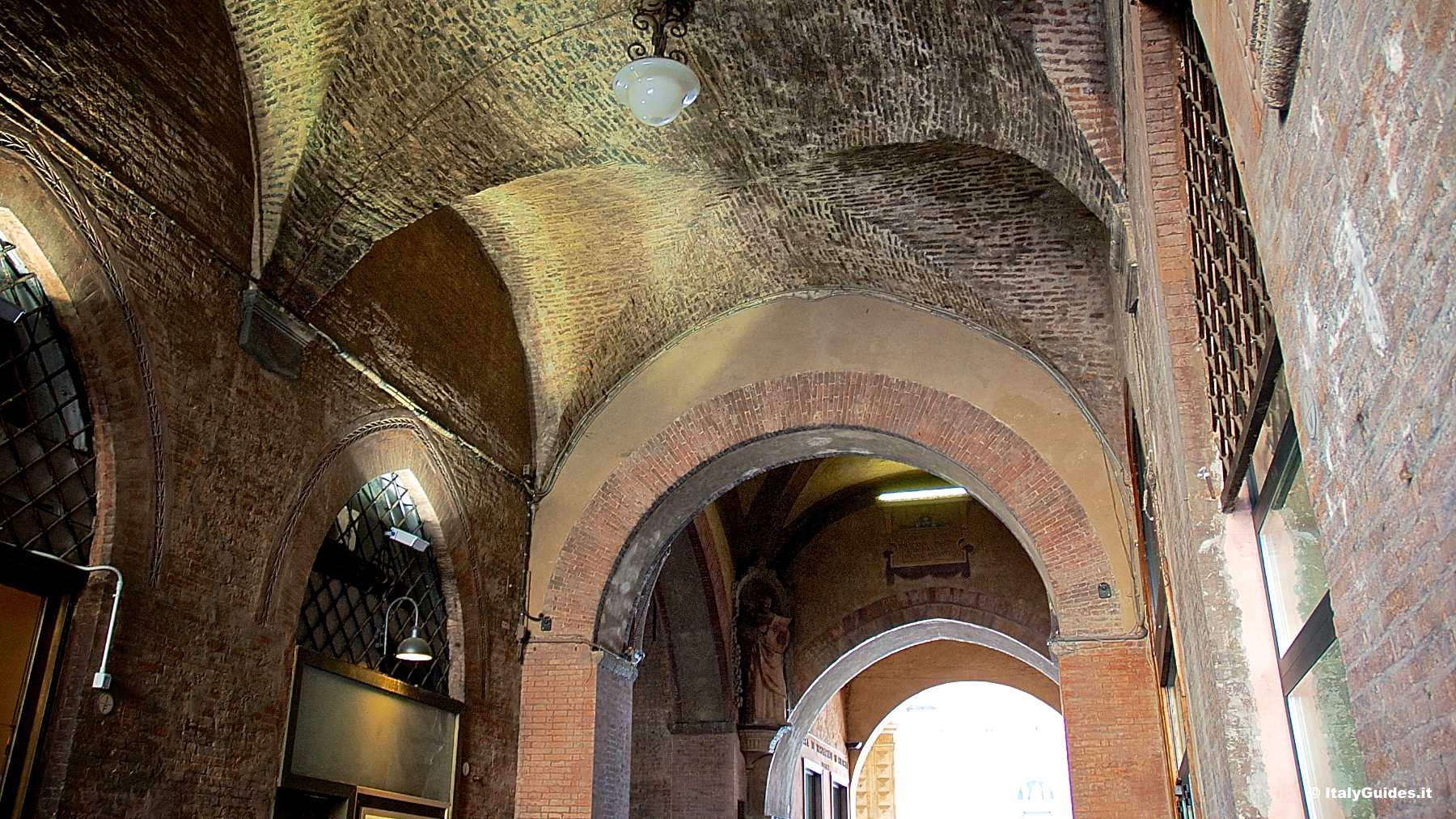


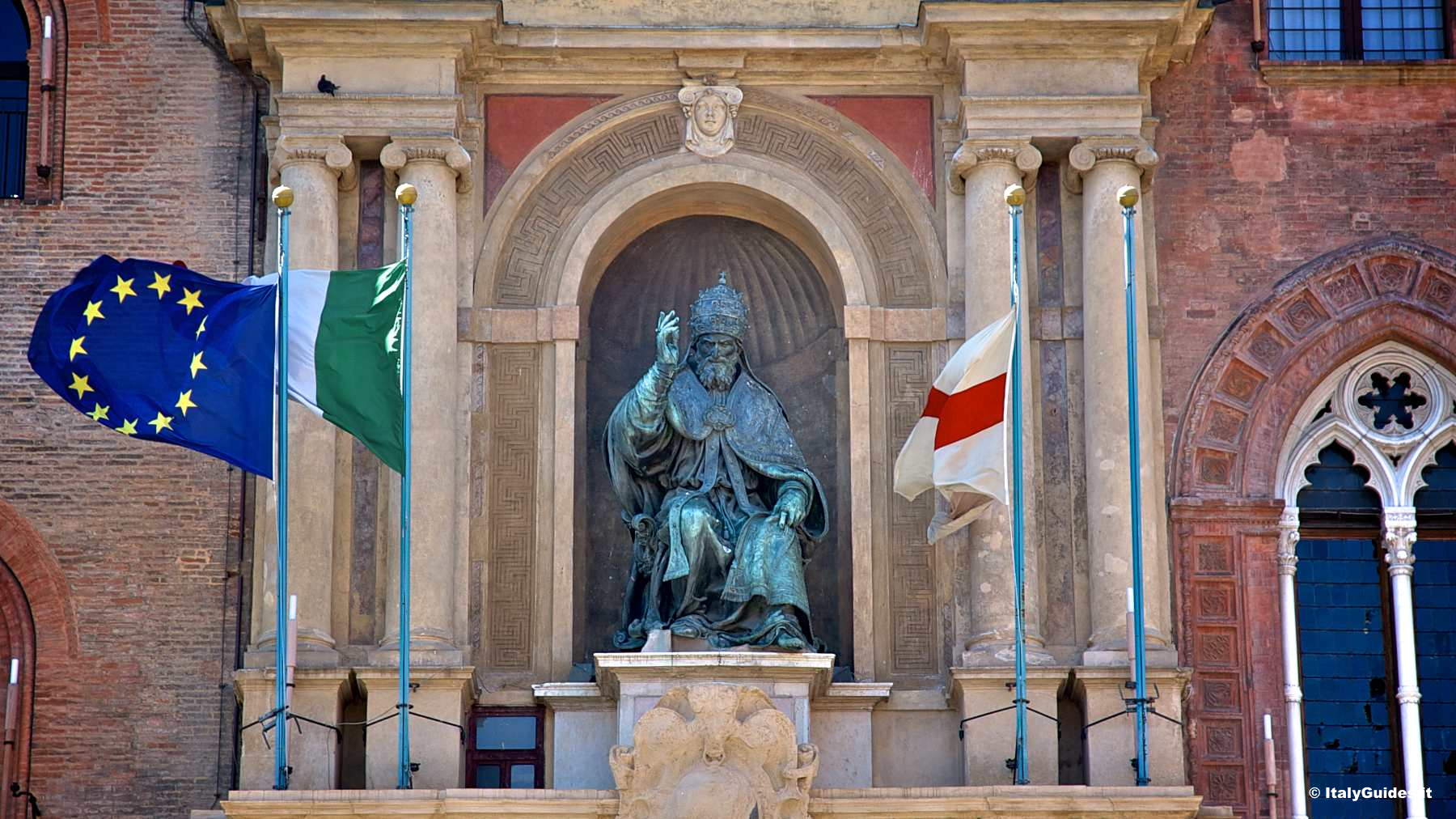
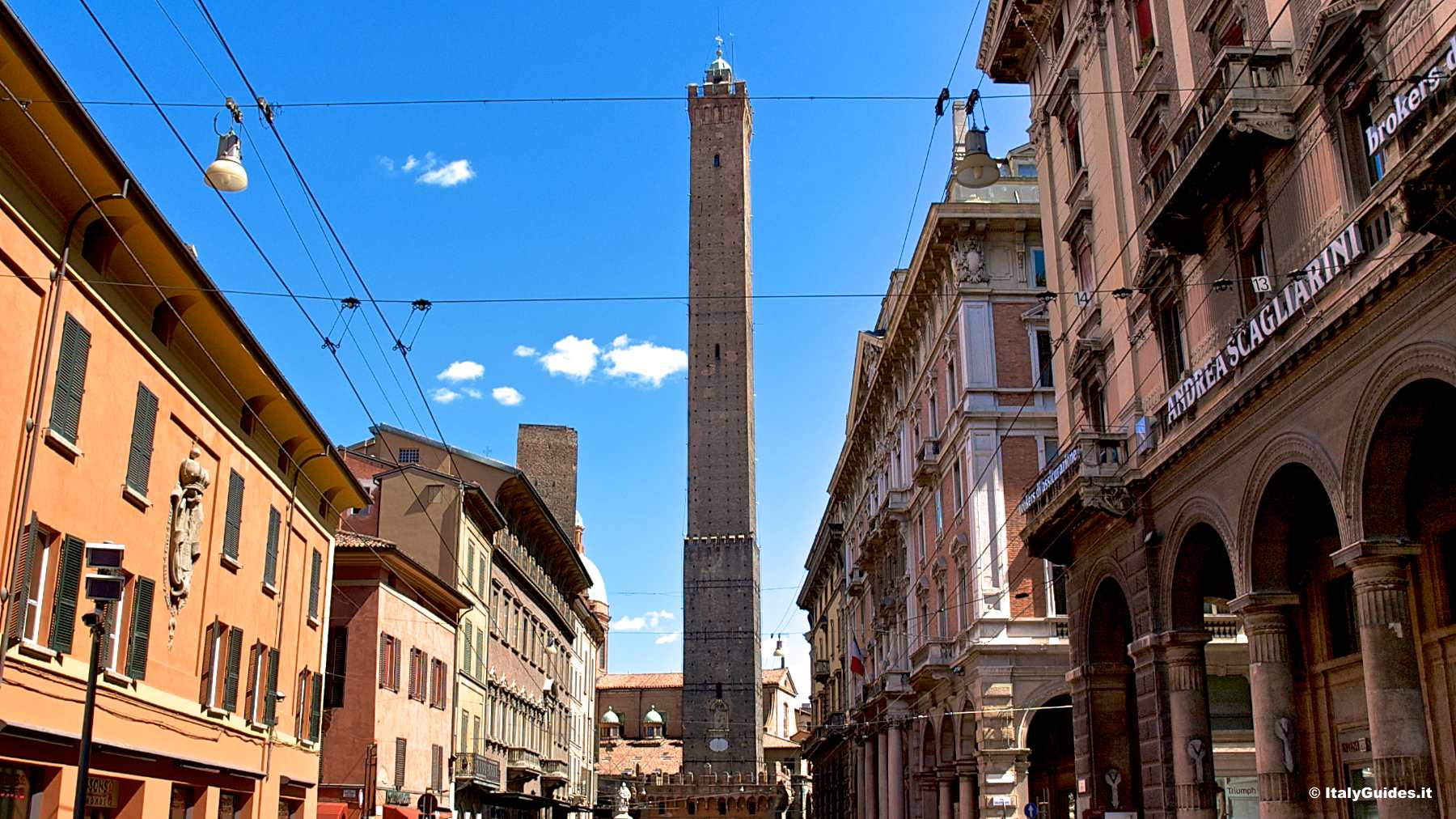
The Palazzo del Podestà was erected in 1200 as a public building and a seat of power. Today it looks very different, partly because the Palazzo di Re Enzo was built next door.
It is an architecturally impressive complex which includes two roads that cross under the Voltone del Podestà. Overhead rises the Torre dell'Arengo with its bell that was used to summon the population in extraordinary moments.
The Voltone del Podestà is decorated with terracotta statues placed there in 1500 of the protective saints of the city: San Petronio, San Procolo, San Domenico, and San Francesco. Under the Voltone del Podestà there is an extraordinary acoustical effect where you can stand under opposite corners of the arch and hear each other clearly at a whisper. The lower part of the building is decorated with floral motif tiles, each one unique.
The Palazzo del Podestà proved too small to accommodate the large numbers of townspeople who turned out to participate in the city governance. As a result, a mere 40 years after its construction, the Palazzo Re Enzo was built alongside it.
Bologna’s Piazza Maggiore began as the “platea communis”, the place where people gathered and the market was held. It was one of the most important urban projects in Medieval Bologna, built to give prominence to the seat of city government and create a place for the market. To accomplish this, the city acquired many of the buildings in the surrounding area and then tore them down.
The piazza as it appears today is the result of several alterations. Begun in the 13th century, the main purpose was to establish a physical as well as a symbolic core. The piazza continues to serve this function. It is still the preferred meeting place of the Bolognese who gather in the shadow of the statue of Neptune – a Bologna symbol – with the Basilica of San Petronio (dedicated to the city’s patron saint) in the background.
Piazza Maggiore is surrounded by the most important buildings of the medieval city. The oldest is Palazzo del Podestà. Dating back to 1200, it first occupied the north side below the Torre dell'Arengo whose bell was once used to summon the population. After a few years it became apparent that more government space was needed, so the palatium nuvum was built, now called Palazzo Re Enzo. Since then, the Palazzo del Podestà has been called the “old” building.
To the west of the plaza is the Palazzo Comunale, known as the Palazzo d’Accursio. In front of the Palazzo del Podestà rises the famous, unfinished facade of the Basilica of San Petronio: an example of Italian Gothic begun at the end of the 14th century and never completed.
And finally, closing off the piazza to the east is Palazzo dei Banchi, where the money changers and bankers worked. Designed by Vignola and built at the end of the 16th century, it has a very simple facade. Its purpose was to elegantly mask the humble construction that faced the piazza while retaining the pre-existing road connections that converged here. It wasn’t until the 15th century that the piazza took its present shape. In the 16th century the area was restored at the behest of the pope.
The Piazza del Nettuno and its splendid fountain were built along with the Palazzo dell’Archiginnasio, the first seat of the University of Bologna; it is now a library with one of the largest collections in Europe. The palazzo came to be widely known as "il Pavaglione" (Bolognese dialect for "padiglione" meaning pavilion) and for centuries was the commercial centre for the silkworm trade.

The central area of the piazza features a unique, raised, pedestrian platform built in 1934 and nicknamed “the big growth”. The damage visible on its sides was made by an American armoured tank on 21 April 1945, the day the city was liberated; it has been left as is to memorialize the historic event.
In 1860 Piazza Maggiore was dedicated to King Vittorio Emanuele II with a statue portraying the king on horseback; in 1943 the monument was moved to the Giardini Margherita, where it can still be found today. For the next two years it was called the Piazza della Repubblica until 1945, when it received its current name.
Piazza Maggiore does not lack for attention. In his beautiful song, the Bolognese singer Lucio Dalla called it “Piazza Grande” like the main piazza in Modena. As a result, the two are often confused.
And finally, closing off the piazza to the east is Palazzo dei Banchi, where the money changers and bankers worked. Designed by Vignola and built at the end of the 16th century, it has a very simple facade. Its purpose was to elegantly mask the humble construction that faced the piazza while retaining the pre-existing road connections that converged here. It wasn’t until the 15th century that the piazza took its present shape. In the 16th century the area was restored at the behest of the pope.
The Piazza del Nettuno and its splendid fountain were built along with the Palazzo dell’Archiginnasio, the first seat of the University of Bologna; it is now a library with one of the largest collections in Europe. The palazzo came to be widely known as "il Pavaglione" (Bolognese dialect for "padiglione" meaning pavilion) and for centuries was the commercial centre for the silkworm trade.
The central area of the piazza features a unique, raised, pedestrian platform built in 1934 and nicknamed “the big growth”. The damage visible on its sides was made by an American armoured tank on 21 April 1945, the day the city was liberated; it has been left as is to memorialize the historic event.
In 1860 Piazza Maggiore was dedicated to King Vittorio Emanuele II with a statue portraying the king on horseback; in 1943 the monument was moved to the Giardini Margherita, where it can still be found today. For the next two years it was called the Piazza della Repubblica until 1945, when it received its current name.
Piazza Maggiore does not lack for attention. In his beautiful song, the Bolognese singer Lucio Dalla called it “Piazza Grande” like the main piazza in Modena. As a result, the two are often confused.
San Petronio Basilica
“The facade of San Petronio looks like a ploughed field; the rough grooves in the brick have the same colour as the freshly ploughed Emilia plains.” This is how an Italian writer describes the facade of San Petronio, Bologna’s most famous and impressive church. It is the sixth largest church in Europe, preceded only by St. Peter's Basilica at the Vatican, St. Paul’s Cathedral in London, Seville Cathedral, the Duomo in Milan, and the Duomo in Florence. Its size is impressive: 132 metres long by 66 metres wide by 45 metres tall with the facade reaching a height of 51 metres.
The construction of the basilica began in 1390 following a city council decree entrusting the commission to architect Antonio di Vincenzo. The building was dedicated to Petronio, the city’s patron saint with Greek origins who was Bologna’s bishop in the 5th century. Site work began with the expropriation and demolition of numerous medieval buildings adjacent to the Piazza Maggiore. Building construction began with the façade and worked its way back to the apse.
When the architect died twenty-five years later, the plan had evolved into a Latin cross and the church was supposed to reach almost 224 metres long and 150 metres wide. The basilica should have been the largest in the world, but things didn’t go well: the pope didn’t approve of the idea of a church larger than St. Peters. Because of this, in 1650 the papal government began building the Archiginnasio on a site immediately adjacent to the Basilica, literally blocking the realization of its ambitious design.
The construction of the Basilica was put on hold for a long time. This was partly due to lack of funding and the technical challenges of achieving the very high Gothic vaults. However, it was mostly due to the sense of disappointment of no longer having enough space to create the enormous transept with cupola as called for in the original design. However, work did eventually proceed with several famous architects taking part in the process.
Among them were: Jacopo della Quercia, il Vignola, Baldassarre Peruzzi, il Palladio and finally the Roman, Giacomo Rainaldi. Of the original Latin cross plan, only half the shorter arm was completed and both the facade and the interior of the church remain unfinished. It was to be the last large Gothic work in Italy, beginning shortly after the Duomo in Milan but ending much earlier.
The Basilica’s facade was designed using a method of cosmological and esoteric “diagramming”. The result measures 60 metres wide and 51 metres tall and is divided in two horizontal bands. The lower one was clad with marble in the sixteenth century; the upper one remains exposed brick and you can still see the irregular profile which was meant to anchor the final cladding.
The lower section has the three doorways and is clad in stone and red marble. The central doorway, also unfinished, was created by the sculptor Jacopo della Quercia who decorated the door frames with bas-reliefs depicting the story of Genesis. They were so perfect that Michelangelo studied them closely and reproduced some of them in his figures in the Sistine Chapel. The architrave shows scenes from the New Testament, San Petronio, Sant’ Ambrogio, and a Madonna with Child that Michelangelo called, “the most beautiful Madonna of the fifteenth century”.
The two side doors were designed in 1500 and subsequently decorated by several authors. On the sides of the Basilica there are buttresses alternating with full-length windows in stippled marble.
The 65 metre tall campanile was built at the end of the 1400s. Its true uniqueness lies in its four bells. They are from the 15th century and are hand rung by city bell ringing societies using the traditional Bolognese technique that may very well have begun in this campanile. One of the bells is called “the scholar” because it marked the beginning of lessons at Archiginnasio University.
Within the shadows of the highest vault, the Basilica holds some real treasures. The play of light on the plaster and stained glass combine to make the interior, the three naves, and the side chapel even more solemn. Inlaid in the church floor is the largest sundial in the world, created in 1600. The hour is not designated with a line of shadow but rather a ray of light forming the image of the sun.
The twenty-two side chapels contain countless works of art: among them is a “Pietà” from 1500 by Amico Aspertini that contrasts with the Raphaelite style of Michelangelo; a San Rocco del Parmigianino, who Vasari describes in his The Lives as "beautiful in all its parts”; and finally the chapel of San Petronio, a splendid example of 18th century art.
San Petronio also contains two of the most important organs in Italy: the one on the right, from 1475, is one of the oldest organs in existence, while the one on the left dates back to the sixteenth century.
Here is also kept one of the oldest Christian symbols in Bologna: the “Four Crosses”. These crosses may have been erected atop Roman columns by Sant ‘Ambrogio or San Petronio just outside the gates way to spiritually defend the city. The Crosses were later enclosed in little chapels and remained there for over 1300 years until they were located within the Basilica along the side naves where they can still be found today.
Despite its hardships, the size of the Basilica is nonetheless magnificent. It can hold approximately 28,000 parishioners, and over the course of the centuries has hosted numerous stately ceremonies, including the coronation of Charles V in 1530. After the sack of Landsknecht in 1527, the idea of having the coronation in Rome was rejected. Bologna, with its magnificent Basilica of San Petronio, seemed the next best choice.
The Bolognese simply say “Palâz” to indicate the Palazzo d'Accursio, the old seat of the Comune which today houses Bologna’s town hall.
It is made up of a group of buildings that have been connected over the centuries. However, it started as the residence of Accursio da Bagnolo, jurist and master of rights at the University of Bologna. In 1336 it became there residence of the Anziani, the highest court of the Comune and therefore the city government seat. The clock tower was added in the fifteenth century.
In one part of the façade is the “Madonna of the Piazza with Child”, made in 1400 by Nicolò dell’Arca, completely out of terracotta. A marble plaque on the Palazzo Comunale states that Bologna’s ancient units of measurement were on public display so that everyone could control them: the most important was the “Bologna foot” which measured approximately 38 centimetres. The plaque was decorated with two clay eagles: according to legend, one of them was made by the young Michelangelo during his stay in Bologna. However these are only copies. The originals were destroyed during a riot.
Inside the palazzo are kept memorabilia and artefacts pertaining to the city’s history, as well as the Morandi Museum. The painter’s family donated his works to the museum.
Both the Sala del Consiglio Comunale on the first floor and the Galleria Vidoniana are filled with frescoes and contain important collections of paintings, furniture, and furnishings; the collection comes from donations to the Comune made in the 19th and 20th centuries. The Farnese room is on the second floor; it is named after the cardinal who commissioned it and is also called the “control room” perhaps because Emperor Charles V was crowned in a chapel nearby.
Decorations here depict important city events from the medieval period through the 17th century. One of the frescoes portrays an unusual ceremony. The kings of France (who later became the sovereigns of England and Hungary) held ceremonies in the court claimed to have healing power. It was thought that the laying on of hands could cure maladies ranging from a stiff neck to a certain strain of tuberculosis that was very common in the medieval period. The highest ecclesiastical figures and nobility attended these events.
The fresco portrays the king of France, Francesco I, in a visit to Bologna in 1515 during which he touched a subject’s scrofula (lesions caused by tuberculosis of the neck). In reality, these supposed powers of the King of England and France were an invention by court chroniclers who wanted to obtain the kings favour by writing that these healing powers came directly from god. At the beginning, this theory was not received favourably by the ecclesiastical authorities. However, once the absolute power of the Emperors was asserted, even the Church began to approve of the ceremonies which were also attended by high prelates.
The Sala dei Cavalleggeri, on the other hand, was used by the soldiers who were responsible for escorting the pope’s ambassadors.
At the corner of the Piazza Nettuno, inside the Palazzo Comunale is found the Biblioteca Sala Borsa. It stands on Roman era ruins - perhaps the Forum - which can be seen through a glass floor.
Sadly, the building is famous for the dramatic events of 21 November, 1920 when the freshly elected mayor was presiding over the inaugural session of his new term. The piazza was filled with celebrating citizens, when shots suddenly rang out. The crowd was caught between the two lines of fire: on the one side were the fascists firing at the Palazzo d'Accursio and on the other, the carabinieri returning fire. 10 people were killed and 58 injured.
Fountain of Neptune
Because of its size, the statue of Neptune is called “il Gigante” (the Giant), or “al Żigànt” in Bolognese dialect. It was built in 1566 according to the inscription at the base of the fountain, “to serve the people”; namely, to beautify the Piazza Maggiore because it was a stop on the route between the Archiginnasio and the Palazzo del Comune. Freshly elected Cardinal Carlo Borromeo was responsible for wanting the Piazza Maggiore improvements; the work was meant to symbolize the happy rule of Pope Pius IV, his maternal uncle.
A young Flemish man, Jean de Boulogne, was called in from Douai to handle the undertaking. Known as Giambologna, he was eager to prove himself after having just lost the competition for the Fontana del Nettuno in the Piazza della Signoria in Florence.
An entire city block was razed to create the fountain, with both houses and shops paying the price. The statue of the god Neptune was placed at the exact point where the cardo and the decumanus – the proto-typical main streets of a Roman city - intersected. The fountain was supplied with water piped in from an ancient underground cistern and a spring found below a convent.
Just steps from the city’s political core, the fountain was an immediate hit with the vegetable sellers, launderers, and artisans -- so much so that a punishment of 50 lashes was given to women and children caught using it for bathing, while the punishment for men was “ (a torturous and crippling procedure involving tying the arms behind the back and cranking up on them to the point of dislocation).
It is said that Giambologna wanted to fashion Neptune with larger genitalia but naturally met with opposition from the Church. However, the sculptor would not be swayed: he designed the statue so that from a particular angle the thumb of the outstretched left hand lines up with the groin area, making it look like an erect penis. According to the prelates, the women of Bologna were so disturbed by the sight that the Church had to put bronze pants on the statue. Actually, the entire fountain has a strongly erotic quality: just take a look at the voluptuous nymphs spraying their breasts with water!
There is also a noteworthy superstition. In order to pass an important exam, students run two counter-clockwise laps around the fountain. Apparently this practice comes from Giambologna himself who - being extra careful while planning the fountain because of his earlier “failure in Florence” - continually circled the base deep in thought. And good luck certainly isn’t lacking here. The trident the god is brandishing has become one of the world’s most well known symbols: that of Maserati, the Bologna based automobile manufacturer.
They talked about us: