
They talked about us:

Italy at its best
Discover the beauty of Italy, get insider tips and travel advice.
This is the start of a mysterious and fascinating trip: a voyage across more than 20 centuries of creativity through which art and history intertwine, telling the story of what human ingenuity has created through the ages.
This is the start of a mysterious and fascinating trip: a voyage across more than 20 centuries of creativity through which art and history intertwine, telling the story of what human ingenuity has created through the ages.
Here you can discover the incredible treasure that Italy holds, a true treasure trove of art, history, and unparalleled wonders. We are delighted to accompany you on a sensory and emotional journey through the most important tourist destinations, where art blends with nature, creating unforgettable experiences.
Discover our products designed for tourists
Campatelli tower-house
The Campatelli tower-house is an 18th century palazzo that encompasses one of the famous towers of San Gimignano. The construction of the original property – the Medieval tower – dates from mid-12th century: a typical tower-house on the Pisan model, it was initially 11m in height and was then raised up to reach the 28m we see today.
 The height of the towers was increased in order to display the power of the local families, but in certain cases, such as this, the towers could serve as actual residences, with the rooms arranged vertically on wooden floors that have today been partially reconstructed.
Over the centuries, various adjacent constructions were added to the tower, and by the mid-18th century the building resembled a typical palazzo with a Florentine-syle intonaco facade. In the early 19th century, the Campatellis, a landowning family of entrepreneurs, acquired the entire building, transforming it into a traditional upper-middle-class house, to which they would come to manage their affairs and the income they received from the lands they owned just outside the town, or to spend their holidays.
 In 2005, Lydia Campatelli, the last owner of the property, donated the Campatelli Tower-House to FAI on condition that it be opened up to the public, together with the furnishings and the collection that it be opened up to the public, together with the furnishing and the collections contained within it, including the pictures by the famous Florentine artist Guido Peyron (1898-1960), the donor’s uncle.
Today, the Campatelli Tower-House offers a rich, multi-faceted visitor experience, featuring fascinating content and immersive screenings. This allows visitors to get the most out of a trip to the town and to become enthused about its history, art and landscape.
The visit begins in the Attic Spaces and the Tower, where you are treated to a screening of A Thousand Years in San Gimignano. Which brings the walls of the house to life. The film enters into a dialogue with a dazzling alabaster model of the town, in a captivating combination of audio-visual evocations that signals the start of your journey in search of San Gimignano.
 On the same floor, you will come across a space where you can browse books on the town and the surrounding area, and discover – in a small, temporary exhibition – a number of compelling items from the archive of the family who lived in Casa Campatelli.
The visit continues on the piano nobile, which has been remodeled to resemble the way it would have looked in the late 19th century, with original furnishings and objects d’art from the house, to give you the chance to savour the atmosphere of an earlier age. As you make your way between public rooms and bedrooms, where you will find paintings, documents, decorative pieces and photographs collected by the donor, which illustrate the people who lived here and their experiences, as well as the more general lifestyle of a typical upper-middle-class Tuscan family of the time.

Photo gallery: pictures of San Gimignano
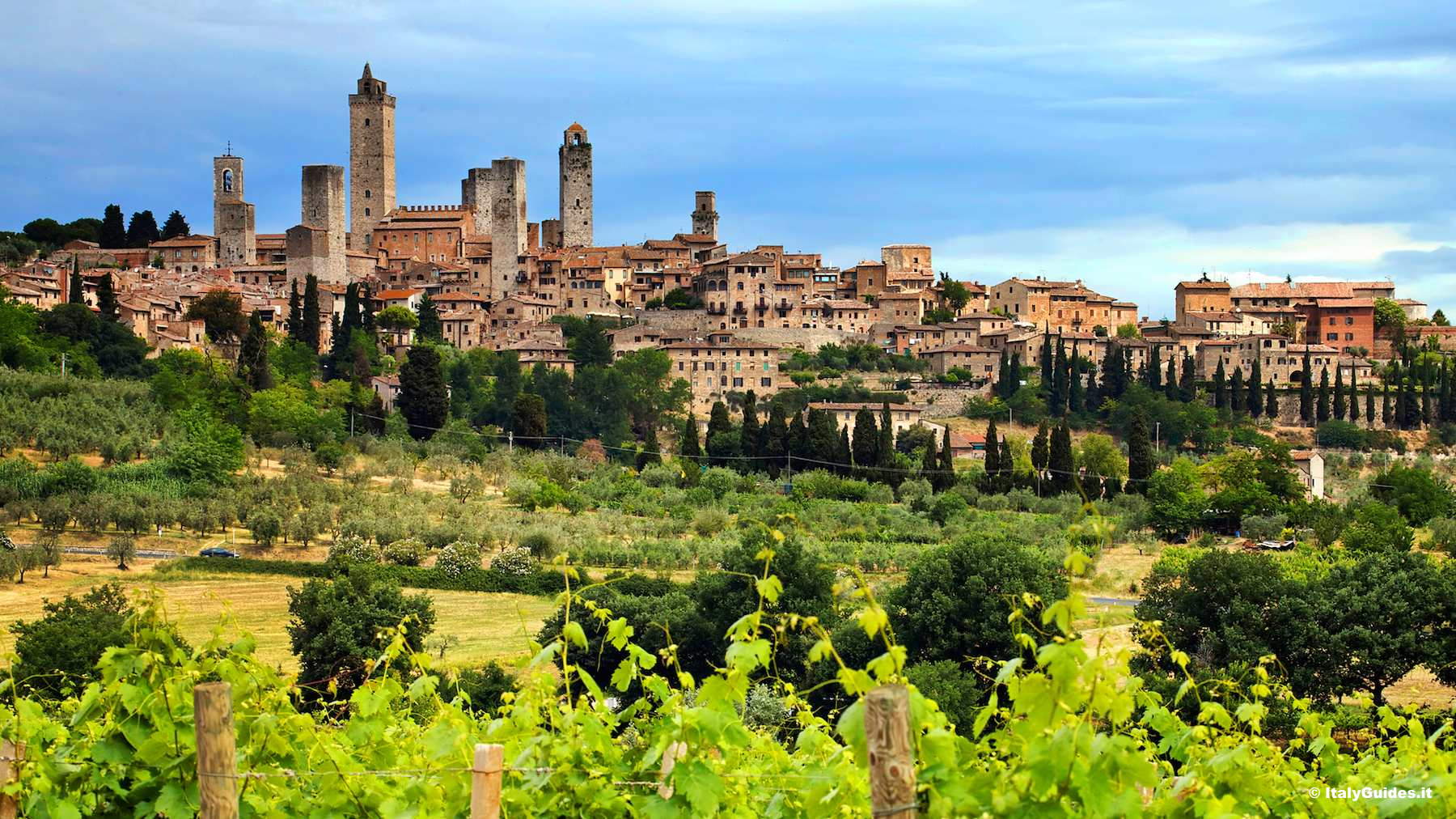 San Gimignano overview
 Towers of San Gimignano
 San Gimignano alley
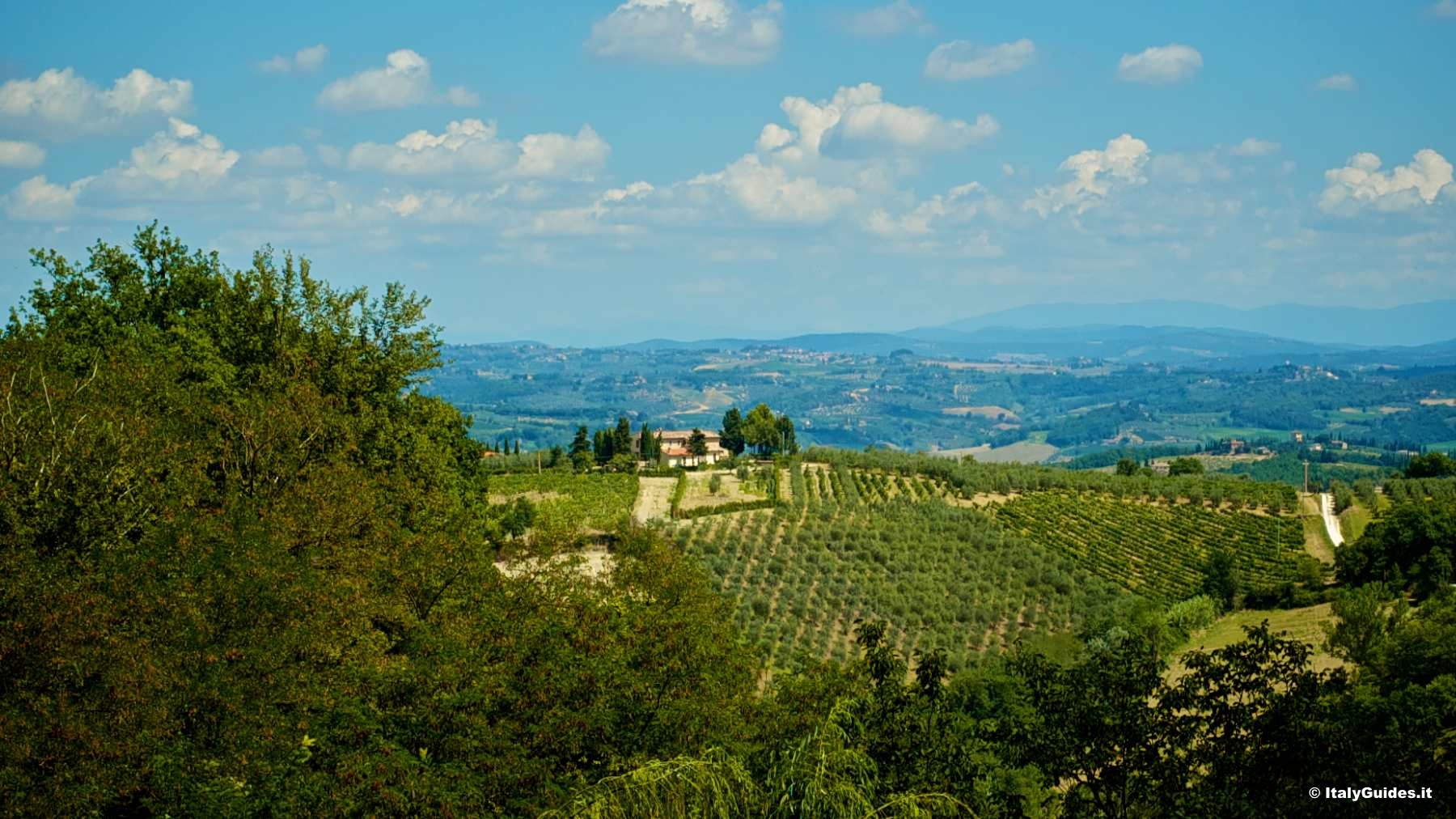 San Gimignano
 Medieval Fountains
 Medieval Fountains
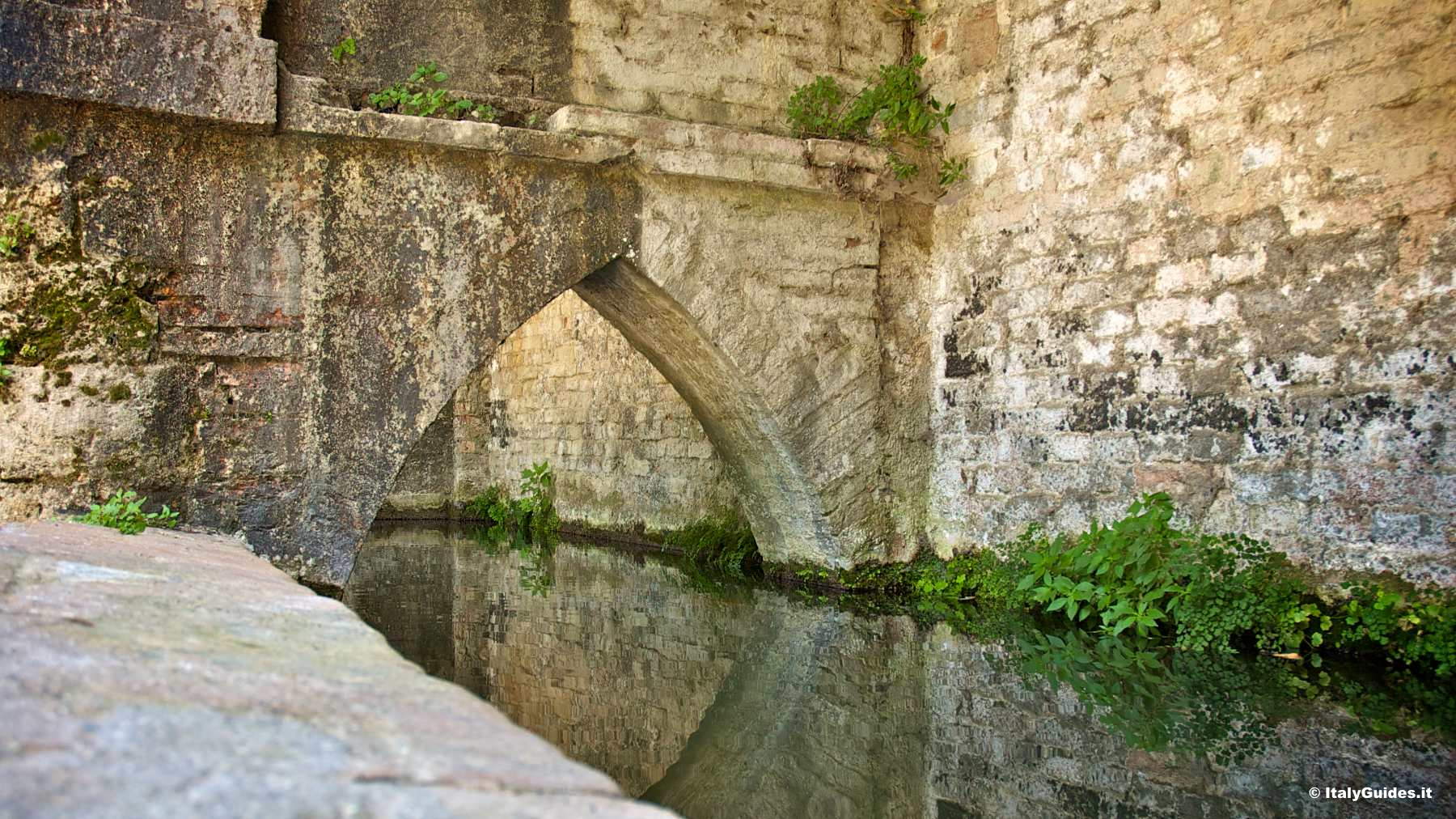 Medieval Fountains
 Medieval Fountains
 Palazzo Nuovo del Podestà: courtyard
 Palazzo Nuovo del Podestà: courtyard
 Palazzo Nuovo del Podestà: courtyard
 Palazzo Nuovo del Podestà: courtyard
The Piazza della Cisterna is the most beautiful and famous piazza in all of San Gimignano. It is enclosed by a wall of nobility houses and medieval towers. It marks the junction between the two most important roads: the Francigena and the road leading from Pisa to Siena. It was the heart of San Gimignano, forming, along with the Piazza Duomo, the cornerstone of the medieval city. While Piazza Duomo was the religious and political centre, the Piazza della Cisterna was the place dedicated to popular culture, with a marketplace and a site for holding public performances, festivals, and tournaments.
Its appearance is attributable to the 13th-century layout undertaken in accordance with the rules set by the Ghibelline comune. It is shaped like an inverted triangle and takes advantage of the natural slope of the land. It is completely paved in brick and connects to the Piazza del Duomo with an open passageway.
Its name comes from a water cistern found at the centre of the site, where an octagonal travertine well forms a pivot point in the piazza. It offers a view out through the straight passageway of Arco dei Becci, one of the gates in the ancient medieval wall.
Next to the gate are the charming Torri dei Becci and Torri dei Cugnanesi. Nearer the well are very important buildings: the Palazzo Razzi, with its splendid two-light mullioned windows; Casa Salvestrini, which at one time was a hospital and is now a hotel; and Palazzo Tortoli, which is next to the “severed” tower that belonged to the Capitano del Popolo (it was cut down during struggles between rival families).
To the north are the Palazzo dei Cortesi and the charming Torre del Diavolo, with the unusual name and its unsettling connection to a mysterious legend.
After the Case dei Cattani on the same side, the passageway leads to the Piazza del Duomo. The opposite side of the piazza consists of different palazzos with façades constructed with different coloured materials. They all belonged to the nobility. To the west, on the side that borders the Loggia del Comune, are the Torri Gemelle of the Ardinghelli and the tower of the Palazzo Pellari.
From the piazza one enters the narrow Vicolo dell'Oro, an alley so named because there were goldsmiths and “hammerers” (artisans who created the very thin gold leaf used to cover the wood bases for polittici, the frescoed tables with the images of the saints, that decorated the church altars).
Tower of the Devil
The Devil's Tower, one of the 14 remaining medieval towers in San Gimignano, is located on the northernmost side of the Piazza della Cisterna and is part of the Palazzo dei Cortesi.
The tower has a mysterious and unsettling name that is tied to a legend. It is said that upon returning from a trip, the owner noticed with great surprise that the tower was taller than when he left it. This miraculous event was immediately attributed to some diabolical intervention, and so the name of the tower became inextricably linked with the Devil.
The other tower has a double doorway that suggests that there was an ancient foot path passing through it. Right below the tower is the Vicolo dell'Oro, where you find the workshops of the "hammerers,” the artisans who vigorously beat gold coin to reduce it to incredibly thin gold leaf, which is then used for painted tables.
Looking up you can notice that the upper floor of the tower has several holes in the walls. These received the timbers that held the galleries (equivalent to our balconies) that allowed people to walk outside, from one room to another. Importantly, these were also able to be rapidly dismantled in case of danger, in order to prevent enemies from accessing the tower.
It is for this same reason that the windows that open on each floor are just narrow slits. This was typical of the Middle Ages, when defence took priority over aesthetics, comfort, and the brightness of the environment.
The top floor would have had a gallery that ran around it as well. This too has only a few supports remaining. Perhaps it was their somewhat sinister appearance that helped fuel the legend.
The Palazzo Cortesi, adjacent to the tower, has only two floors, each one illuminated by a lancet window (a narrow window) and created from a darker stone than the material of the tower.
Today the Piazza Duomo is still the heart of San Gimignano, just as it was the centre of political and religious life in the Middle Ages. It marks the intersection between the Via Francigena (running north to south) and the old Pisa-Siena Road (running east to west).
It is a brick, trapezoid-shaped space with a slight slope, adding to the wonder of those who upon entering find themselves all of a sudden at the centre of the Middle Ages. Three important medieval buildings face one another here: On the north side, projecting up into the sky, are the Torri Gemelle dei Salvucci. On the opposite side is the Palazzo Nuovo del Potestà with the Loggia del Comune. Beside it is the massive Torre Grossa.
The most imposing building is the Collegiata; it is at the centre, overpowering the piazza with its bulk as it sits on high atop a stairway. Exactly opposite is the Palazzo Vecchio del Potestà with the Torre Rognosa and the Torre Chigi alongside.
The Collegiata, also know as the Duomo, gives its name to the piazza and has been there since the 11th century. In the first half of the 13th century, during the period of greatest economic prosperity, the piazza assumed the appearance it still has today. The main public buildings were built here, and the façade of the Duomo was rotated to face the Palazzo Vecchio del Potestà.
Church of Collegiata
Duomo of Santa Maria Assunta
To the right of the Collegiata, the Piazza Pecori opens up as a small peaceful piazza connected to the Piazza del Duomo.To find it, one only need pass by the Torre Grossa and proceed through the Arch of San Giovanni (so called because there is a statue of the saint at the top that was first on the Porta Alle Fonti, one of the city gates).
The Chiesa Collegiata, the Duomo of San Gimignano, dates from the 12th century. It is a splendid building with all of its medieval features preserved. It is considered one of the best examples of the Tuscan Romantic Style.
There is a breathtaking view of the addition in the interior. Splendid frescoes also completely cover the walls of the three naves, a concentration of priceless works of art.
The decorations depict stories from the Bible and the lives of saints. Artists with work here include: Benozzo Gozzoli, Domenico Ghirlandaio, Taddeo di Bartolo, and Jacopo della Quercia, who created the wooden Annunciation.
Subcategories
They talked about us: