
They talked about us:

Italy at its best
Discover the beauty of Italy, get insider tips and travel advice.
This is the start of a mysterious and fascinating trip: a voyage across more than 20 centuries of creativity through which art and history intertwine, telling the story of what human ingenuity has created through the ages.
This is the start of a mysterious and fascinating trip: a voyage across more than 20 centuries of creativity through which art and history intertwine, telling the story of what human ingenuity has created through the ages.
Here you can discover the incredible treasure that Italy holds, a true treasure trove of art, history, and unparalleled wonders. We are delighted to accompany you on a sensory and emotional journey through the most important tourist destinations, where art blends with nature, creating unforgettable experiences.
Discover our products designed for tourists
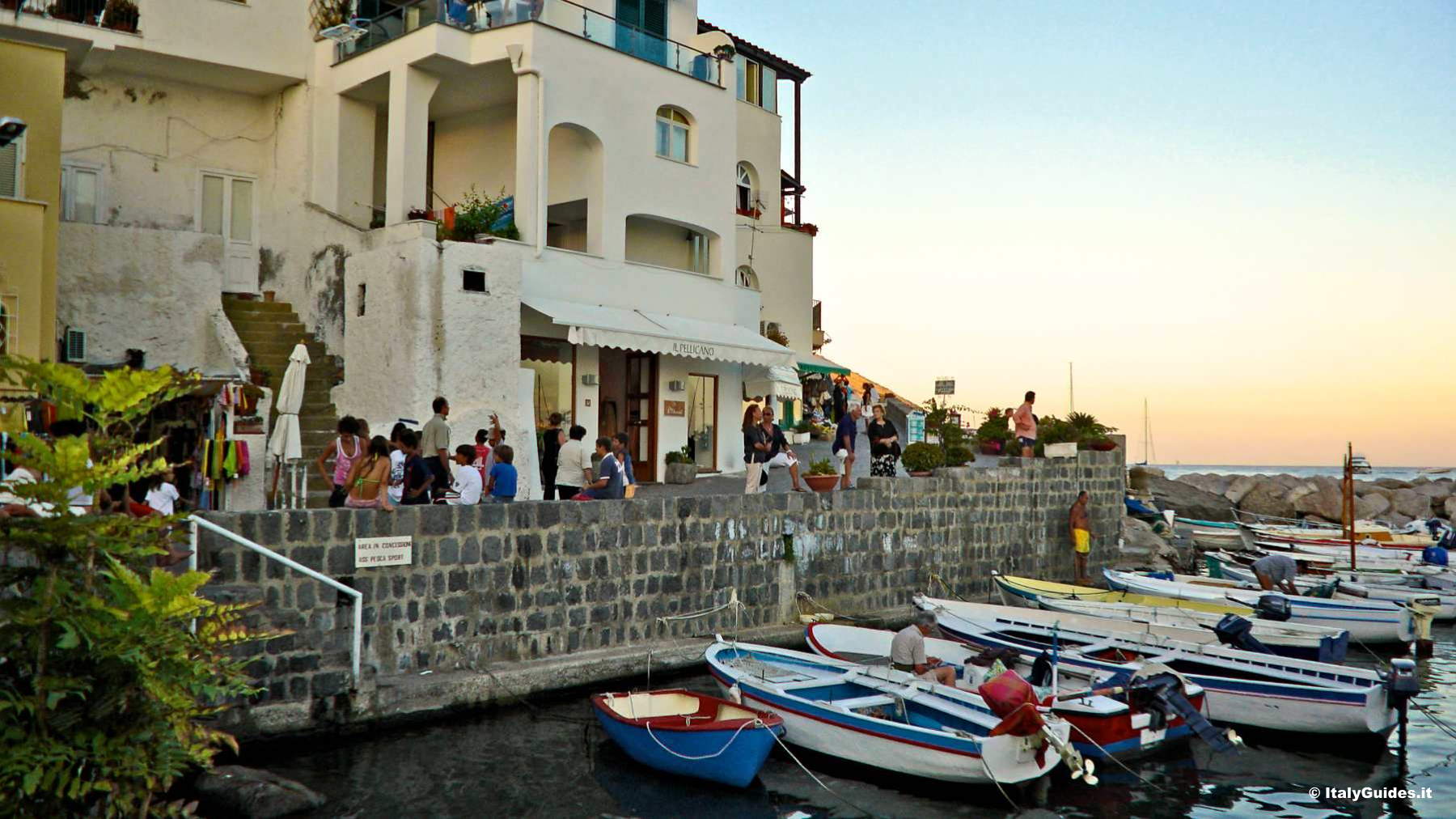
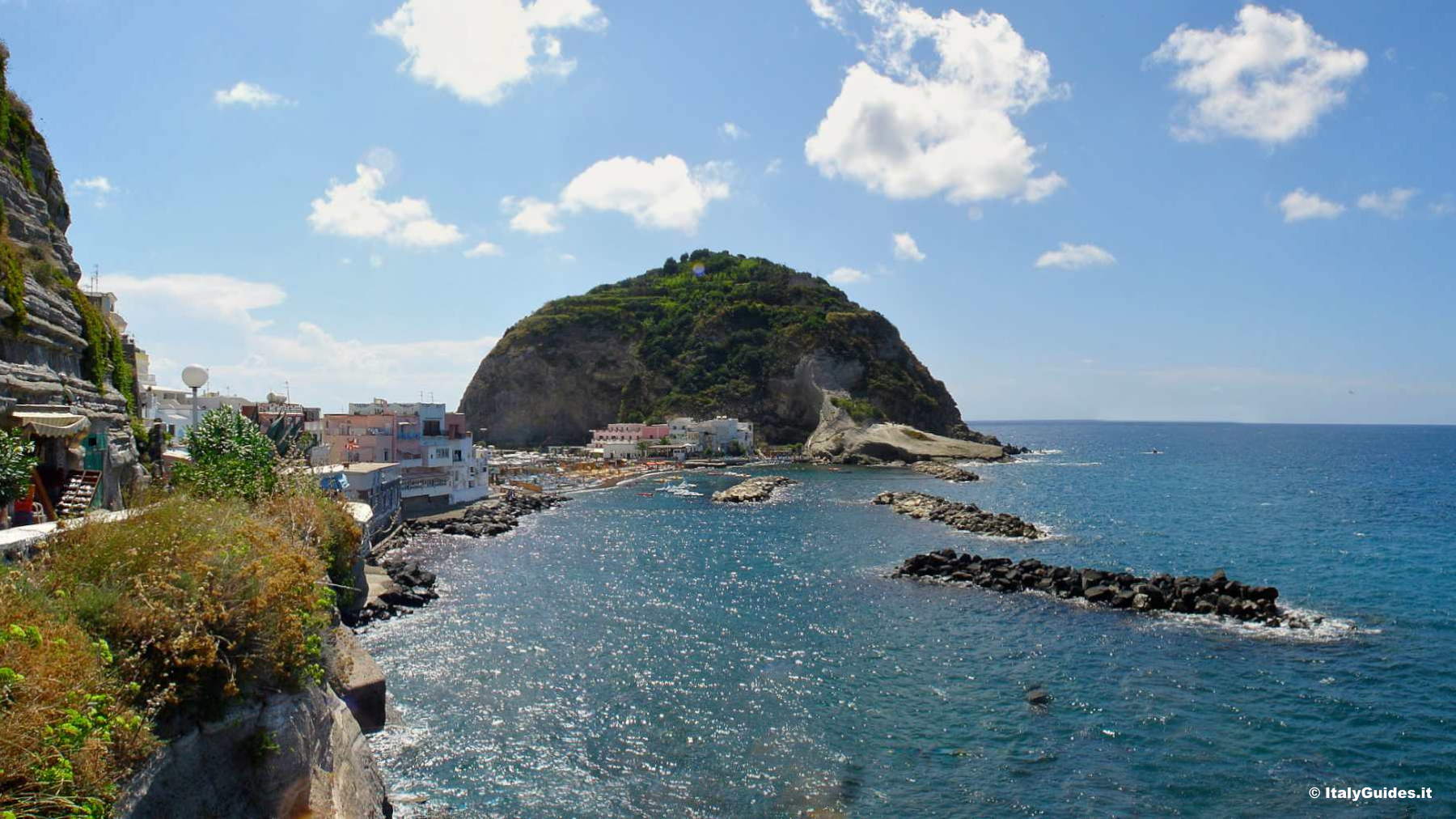
Sant'Angelo is a splendid fishing village, perhaps the most beautiful on the island. It can be reached exclusively on foot; which contributes significantly to preserving this place, which seems to have remained unspoilt as it used to be, with the sea life being lived on the narrow jetty. It is in an enchanting position, between two bays formed by a spit of sand.
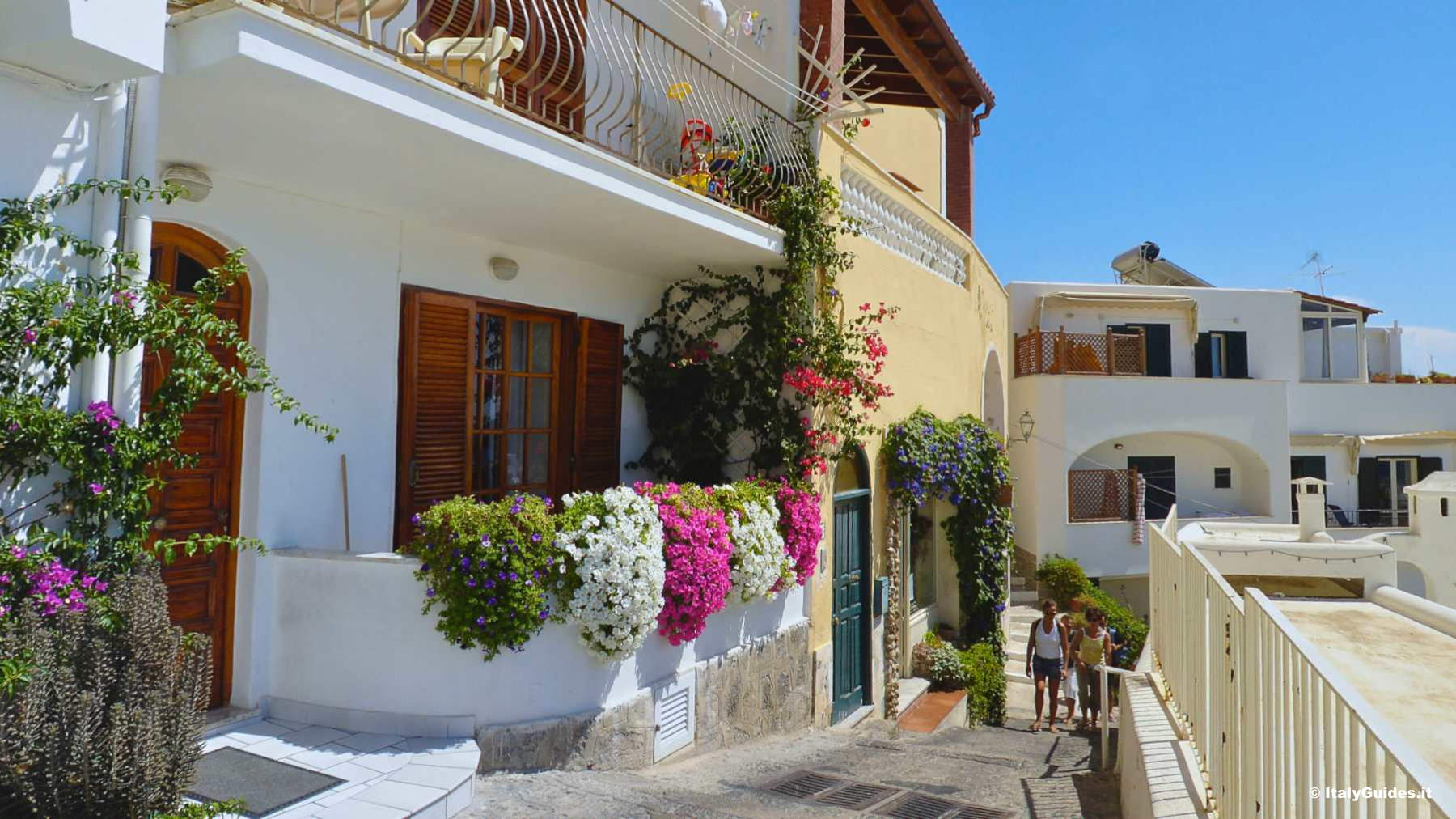
The houses are still typical fishermen's houses, which seem to fit into one another, in the typical whitewash of Mediterranean villages, separated only by winding narrow streets. In piazzetta Trofa the houses close into a circle giving life to the centre of the bay.
But at night time the life of the fishermen gives way to the club and bar life, while the harbour becomes the mooring point for luxurious boats and the bay is transformed into the most fashionable and exclusive place on the island.
Today this is a particularly sought-after destination for tourists, many of whom stay permanently on the island. For the laziest the beauty spots of the island can be admired from the picturesque "microtaxis", three-wheeled vehicles fitted out for sightseeing tours. The traditional houses left intact are very few and are closed in by building speculation, but the few remaining ones still have features related to the occupation of the inhabitants: those inland are linked to agriculture, while those on the coast are linked to fishing.
The typical houses are built in stone or carved in the rock (tuff), like those on mount Epomèo, with the roofs made, to make them lighter, in a material obtained by striking lava stone with large sticks. When the building of a house, which involved all the neighbours, was finished, a big celebration was organised with music, dancing, singing and plenty of food. Continuous destruction by earthquakes has however given the island its present appearance, with baroque and liberty style buildings alongside rural houses.

The Mortella is the splendid garden created by the wife of the English composer William Walton. As well as offering cool shelter to travellers, it offers the maximum relaxation among plants from every corner of the planet in a variety of settings, including also a zen garden. The gardens are completely devoid of architectural barriers and host countless concerts and cultural events.
The sea around the island is a spectacle of colours and underwater life and is soon to become a protected marine area, named the "Kingdom of Neptune". From seaweeds to dolphins to coral, everything contributes to making the seabed an underwater paradise.
Particularly picturesque is the landscape that can be enjoyed form the Forio Point, where the sunset creates a unique, inexplicable optical illusion, a green light on the horizon, and where the women of the island used to wait for their husbands who had gone to sea, praying that they might appear soon on the horizon.
The taxi boats that can be hired on the island enable you to discover mysterious, interesting places, like the stretch of beach where the sand becomes as hot as 100°C, due to a strange phenomenon!
The beauty of the island was immortalised in Cleopatra, filmed at an enormous cost on Ischia, which was also the beginning of the love affair between Liz Taylor and Richard Burton.




History, facts and travel tips about Ischia
Ischia, the island of regeneration, of energies, of beauty and history. This casket of delights however has been looted, desecrated and subject to innumerable abuses over the years. This history of misuse continues into the present, as the lure of the quick buck continues to play its role in illegal building projects, damaging the land and the environment.
Ischia's history is littered with owners and sub owners who have seized, lost and re seized the island, often to the bewilderment of its inhabitants and the detriment of its terrain. However, despite the scars strewn across its past, Ischia has an abiding beauty and attraction, due to its riches in natural resources. The island has a unique supply of hot springs, spas, volcanic mud and valuable minerals.
Thus healing and renewal have become a resource by which the Island has recovered its economy and found its zenith as a centre of well being for countless visitors.
It is the largest of the three islands off the coast of Naples, (Procida, Capri and Ischia), and more than holds its own in this trinity of beauty rising from the azure waters of the Tyrrhenian Sea. This haven seems a million miles away from the haranguing, energy charged streets of Naples, (in reality only a short ferry journey away) and holds pleasures for the most intrepid or timid of travellers.
Fourty kilometres of coastline offer ample opportunities for sun-soaked relaxation. Inland, mountainous terrain awaits those who enjoy climbing. The peaceful pleasure of the fertile rolling volcanic hills offer less energetic strollers the chance to gain an advantageous view of the island without running short of breath. For the more urban minded visitor there is the elegant, traffic free town of Sant'Angelo with its characteristic boutiques, local pottery and hand-crafted merchandise.
Nearby Forio is known for its bars and tree lined Boulevards, while the Port of Ischia for ferries from the metropolis of Naples, offers discotheques, and high street shopping. Ischia port is also famous for the imposing Aragon's castle, rich with tales of blood and thunder. In the past, the castle was the town itself, housing 1900 families, various religious orders and 13 churches. The castle served as a refuge and defence against the regular pirate attacks with which the island had been plagued in former days. It is now a fascinating museum. Whatever type of pastime is preferred, there is therapeutic mud, spas, springs and cures a plenty guaranteed to relax, creating space from the relentless onward march of twentieth century life as we know it.
Ischia's history is as rich and as varied as its climate and natural properties, beginning with the Greeks, who colonised the island in the eighth century B.C. naming it Pithecusa which translated means "monkey", in reference to the prevalence of these animals on the island in ancient times. Unlike today, the volcano was active. Possibly because of an eruption, the island was abandoned by the original inhabitants, and the more temperate town of Cuma was founded on the mainland.
Ischia was then resettled by Neapolitans, whose explosive character perhaps suited its volcanic activity. In 474 B.C., Hiero of Syracuse warred against the Etruscans and as part of a quest to fortify the whole of Naples, leaving a garrison on Ischia and plans for a castle to protect the capital city of the island (also known as Ischia). He emerged victorious from battle and the castle was built.
In 6 A.D., after his visit to Capri, the emperor Augustus, desperate to obtain the Island, swapped it with Naples for Ischia, which once again fell into Neapolitan hands. However well defences had proved in earlier days, they were ineffective in the face of Romans might some centuries later, and in 322 B.C. the Romans conquered and took Naples and Ischia.
The list of invaders since then is daunting. The first swathe, apart from the steady stream of marauding pirates, included the Heruli, Ostrogoths, Byzantines, Saracens and Normans, who heralded what some refer to as the "first Renaissance" under Roger II. The Normans were followed by Roger II's grandson, Swabian Frederick II, whose mother was a Norman and his father was Henry VI, Duke of Swabia. His reign, for the most part, was peaceful, following the tolerant and eclectic view of government Roger II had begun.
The Angevins who had left their mark, with papal support, on Campania and Sicily, were followed for a time by Alfonso V of Aragon, who in 1441, reconstructed the ancient Greek fort on a grand scale transforming it into the grand castle it is today and which quickly became the scene of many fights, and transference of power.
Under Aragon rule, Alfonso V, proclaimed the island a colony for the Spanish Kingdom of Castiglia. He then built a bridge connecting the castle and its inhabitants with the world beyond its walls to the rest of the island.
By 1550, the threat of invasion by Pirates and the warlike Pisans had abated, and the population shifted from its coastal watch towers, to more comfortable terrain further inland, forming the beginning of what is now the town of Ischia. In its present form the town has six communes, or administrative areas. From where, though the beach has always been accessible, it was no longer of central importance. Throughout this period Ischia was fraught with strife slipping and falling from the hands of the Durres into Anjou power (who had returned since the days of the house of Aragon), and back again, as the rival houses squabbled for possession of the jewel of the Mediterranean.
By the 1700's, the Bourbon's were in custody of the island which in 1806 fell into French possession till it fell prey to the English, in pursuit of the French. Finally a devastating earthquake interrupted, scattering intruders.
Ischia finally found tranquility in modernity, and since the invention of the Grand Tour has been subjected to nothing worse than invasions of fleets of tourists, exploring the island on the picturesque three wheeled microtaxis equipped for touring. These visitors are for the most part German, a large number of whom stay on the island permanently, enriching Ischia's coffers and enjoying its unique pleasures.
Unfortunately, owing to a combination of earthquakes and irregular building projects, very few traditional houses remain intact. Those which have escaped demolition are connected to agriculture, or small coastal enterprises such as fishing. Sant'Angelo is a fishing community and has remained largely untouched.
Typical ancient houses were constructed of stone or carved tuff, such as those found on Mount Epomèo, the highest mountain on the Island. Its name, translated from the Greek means "look around" due to the marvellous views to be had from its heights. The top 75 meters of the peak are bedaubed in volcanic ash, as the mountain, though not volcanic itself, is a result of eruptions from other vents on the island. To avoid excess damage from falling roofs in case of an earthquake or further volcanic activity, roofs of dwellings are created from the lightweight lava "lapilli", largely constituted of volcanic ash, are beaten with sticks and poles till they become a thin waterproof crust. Upon the completion of a house, tradition dictates that a party be held with music dancing and a veritable feast of fine fare.
Regular damage to buildings through earthquakes over the centuries have given rise to different styles of housing, ranging from Baroque to Liberty dotted across the island.
The recently renowned garden of La Mortella, has added depth, appeal and style to Ischia, perhaps symbolising the recent flowering of this beautiful if beleaguered island. Created and commissioned by the wife of the late English musician William Walton, La Mortella, winner of the "Best Italian Garden Award" is to be seen to be believed. As well as the stunning hotel, and the offer of refreshment to travellers, if opening hours are adhered to, relaxation in the cool of the garden, surrounded by flora and fauna from every corner of the globe from Zen to the tropics is there to be enjoyed. The garden and its owner, host countless concerts and cultural events.
This "Eden within Eden", surrounded by the brilliant blue of the wide ocean is home to rare coral and dolphins, and soon to become a protected area under the name of "Reign of Neptune" bathed in blissful weather and blessed with breathtaking sunsets, it is a spectacle of colour and a myriad types of life-aquatic and terrestrial.
Particularly picturesque is Forio, where the Sunset creates an optical illusion of a horizontal green ray. In times past, women would stand beneath this mystic light, praying for the safe return of their husbands from the sea. Waiting at evening for the sight of homecoming vessel silhouetted against the horizon through the shimmering green vale of light, as they returned to the island at dusk.
The mysteries of the sea around the island may now be enjoyed by any traveller who wishes to rent a taxi boat and go exploring. There are any fascinating destinations along the strips of beach around the island, not least of which is an area on the beach which reaches a temperature of 100 degrees!
All these beauties are to be discovered and enjoyed and were immortalised forever in the classic film "Cleopatra", which was filmed on the Island, and perhaps inspired something of the passion between Richard Burton and Elizabeth Taylor.
Port of Ischia
The port of Ischia consists of a natural basin surrounded by hills, formed by the ancient crater of a volcano. In ancient times it was used for breeding fish, but it was under the Bourbons that it became a port. Ferdinand II, who had fallen in love with the lake that he could admire from his villa on the slope above, had a canal dug between two hills to create a protected curved harbour, without a jetty.
Here the church of Santa Maria di Portosalvo was built, while the villa and the spa building, which now forms the council premises, were reconstructed. Today it is the first point of arrival with a short jetty, offering a view over the two spits of land that encompass the sea to form a pool in a splendid landscape offering a safe haven.
Interactive map of Ischia: Top attractions
They talked about us: