
They talked about us:

Italy at its best
Discover the beauty of Italy, get insider tips and travel advice.
This is the start of a mysterious and fascinating trip: a voyage across more than 20 centuries of creativity through which art and history intertwine, telling the story of what human ingenuity has created through the ages.
This is the start of a mysterious and fascinating trip: a voyage across more than 20 centuries of creativity through which art and history intertwine, telling the story of what human ingenuity has created through the ages.
Here you can discover the incredible treasure that Italy holds, a true treasure trove of art, history, and unparalleled wonders. We are delighted to accompany you on a sensory and emotional journey through the most important tourist destinations, where art blends with nature, creating unforgettable experiences.
Discover our products designed for tourists
Free Naples Audio Guide
Self-Guided Walking Tour of Naples

Discover Naples with a free audio guide you can listen to on your smartphone while exploring the city at your own pace. This self-guided walking tour of Naples is perfect for travellers who want to experience the city's history, monuments and atmosphere in a simple and flexible way.
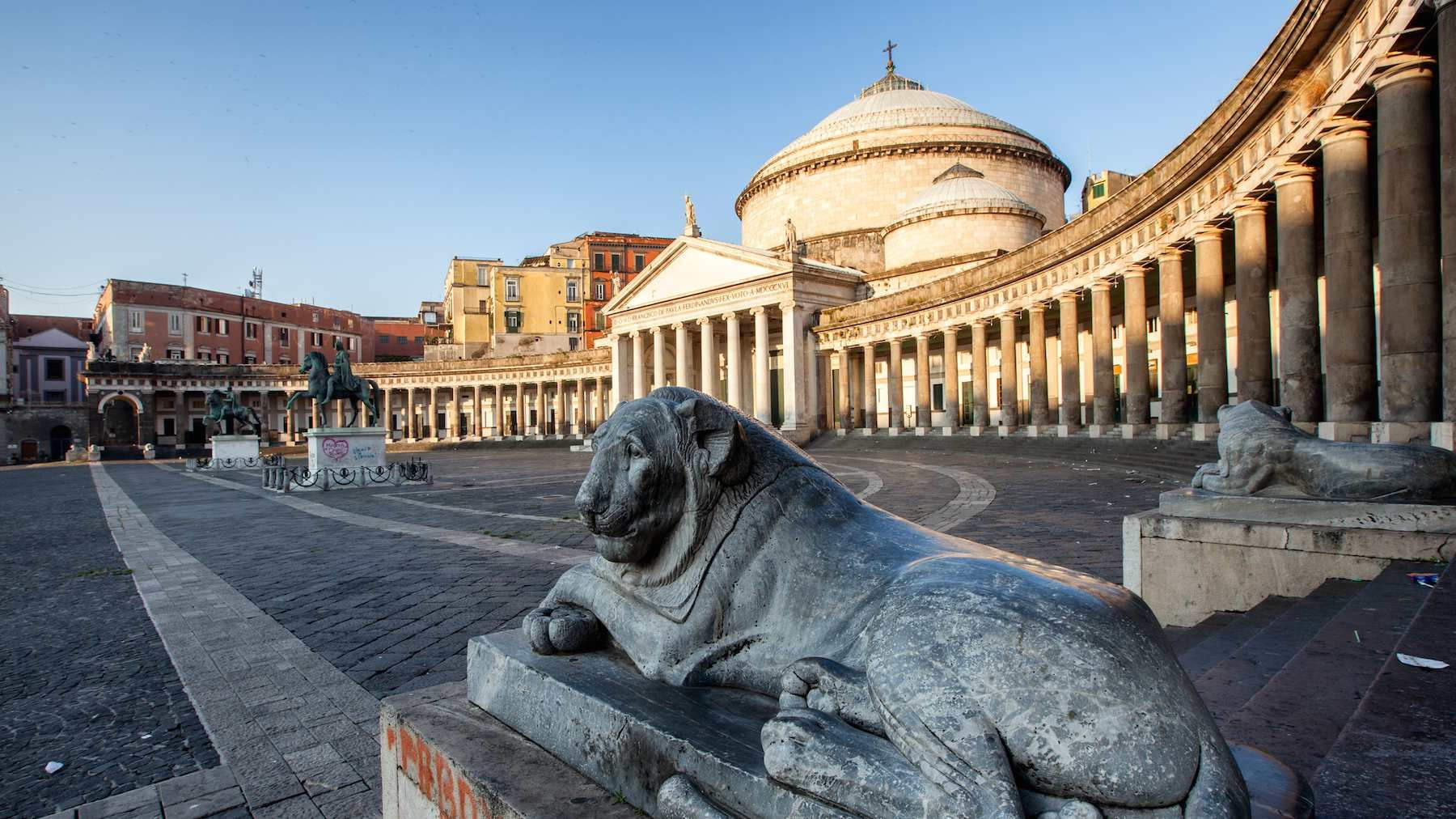
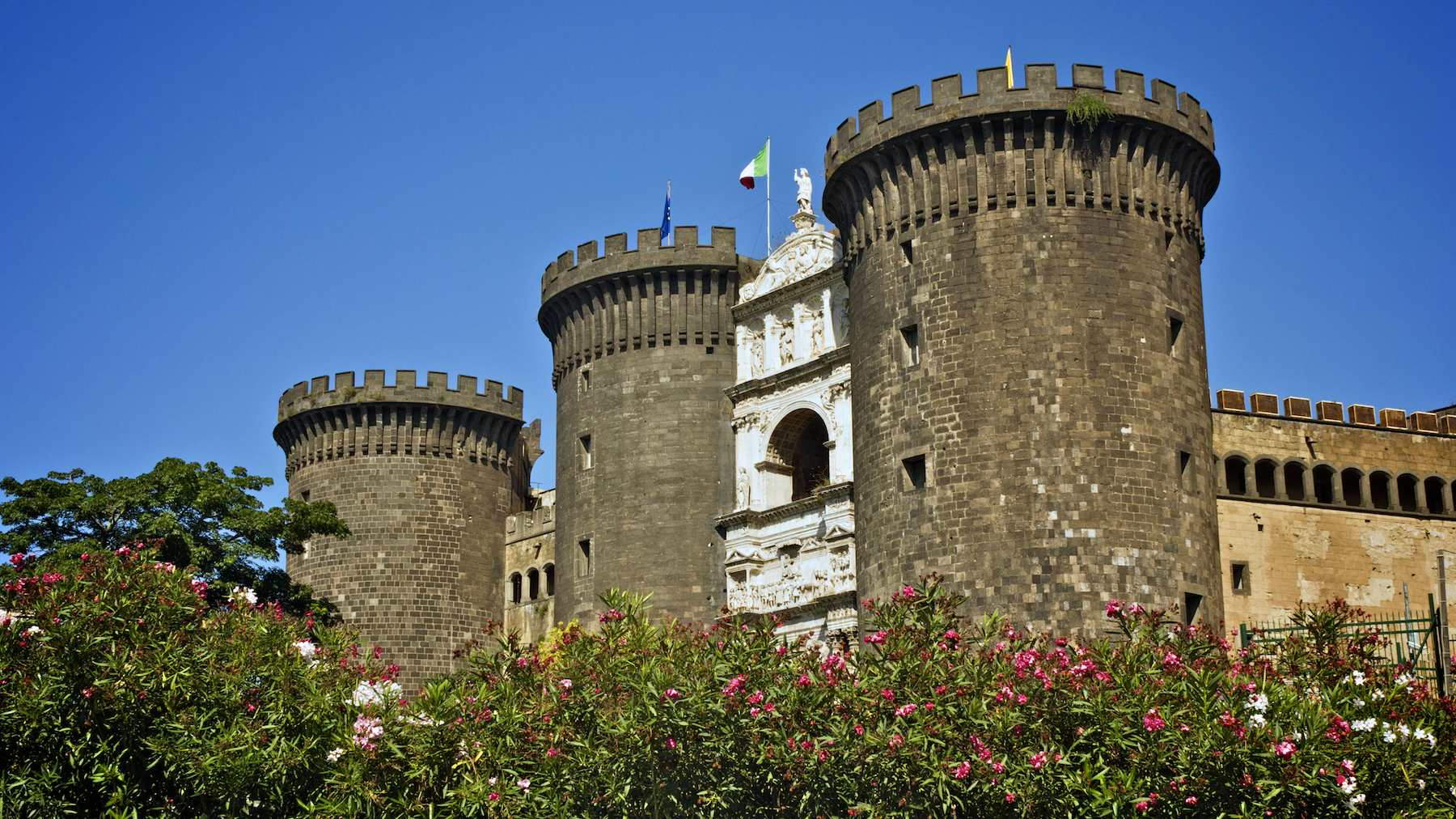
From the impressive Maschio Angioino to the grandeur of Piazza del Plebiscito, each guide helps you discover the art, history and character of one of Italy’s most vibrant and fascinating cities.
This Naples audio guide is ideal for independent travellers who want to explore without joining a group tour. Just press play and enjoy an engaging audio walking tour of Naples through historic landmarks, lively squares and unforgettable views.
What’s Included in the Naples Audio Guide
The audio tour includes:
- Maschio Angioino
- Piazza del Plebiscito
Why Choose a Self-Guided Audio Tour of Naples
A self-guided audio tour lets you discover Naples on your own terms. You can explore at your own pace, stop whenever you want and enjoy a richer experience with stories and explanations always available in your headphones.



History, facts and travel tips about Naples
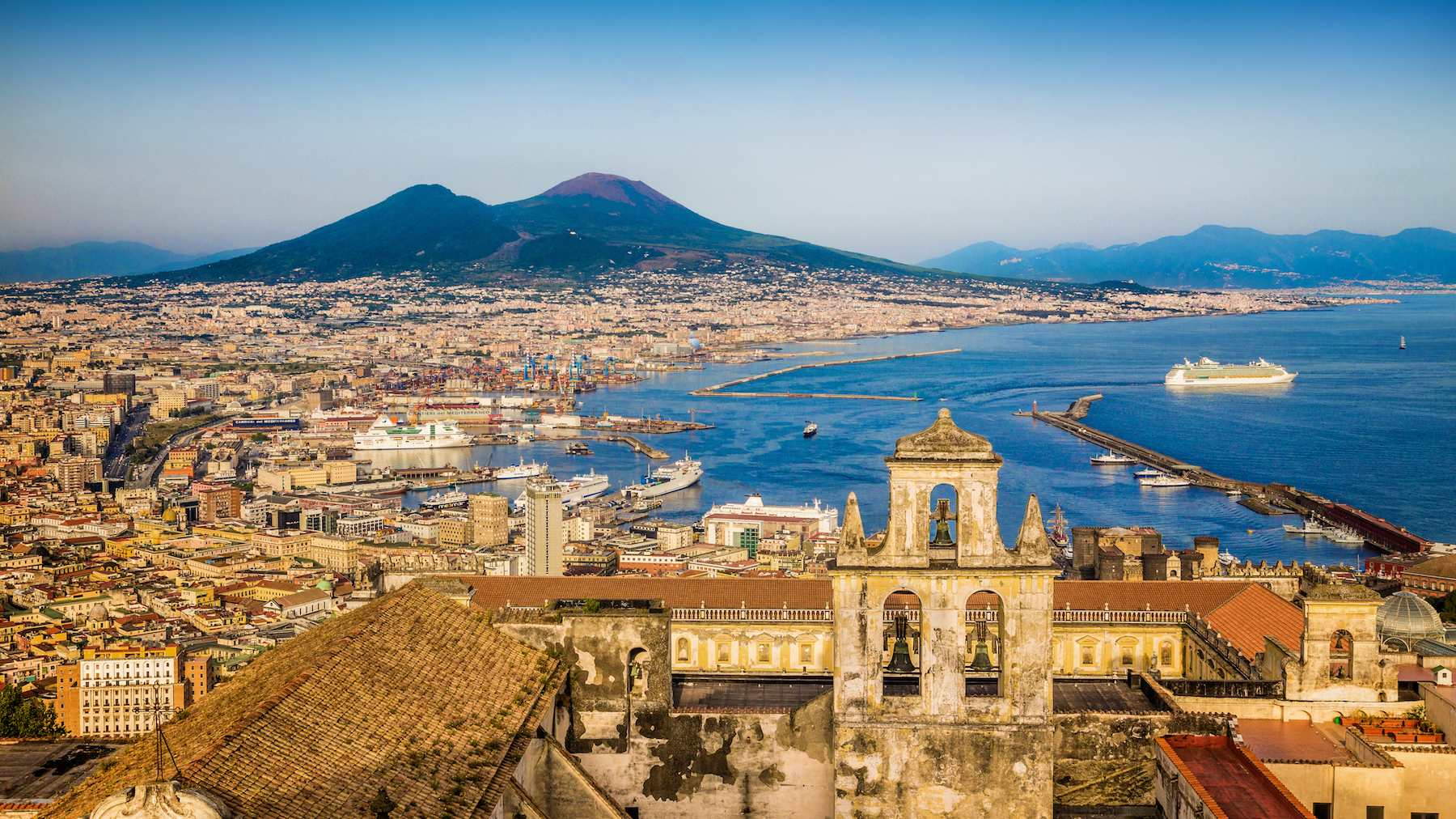
Naples is the capital city of the Campania region and the Province of Naples. Its metropolitan area is the second most populated in Italy and one of the largest in Europe. It is located halfway between the volcano, Vesuvius and a separate volcanic area, the Campi Flegrei.
Galleria Umberto I
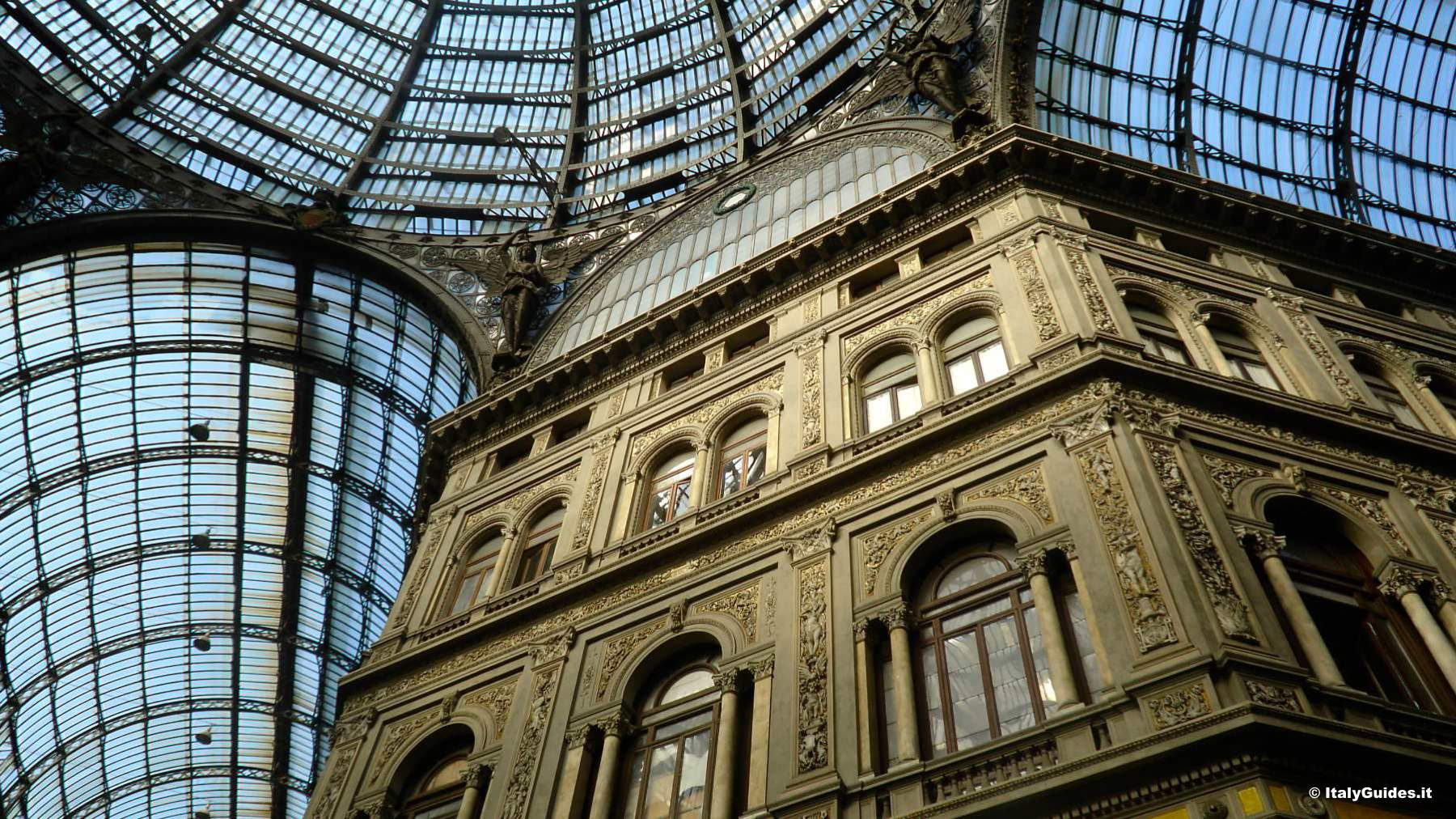
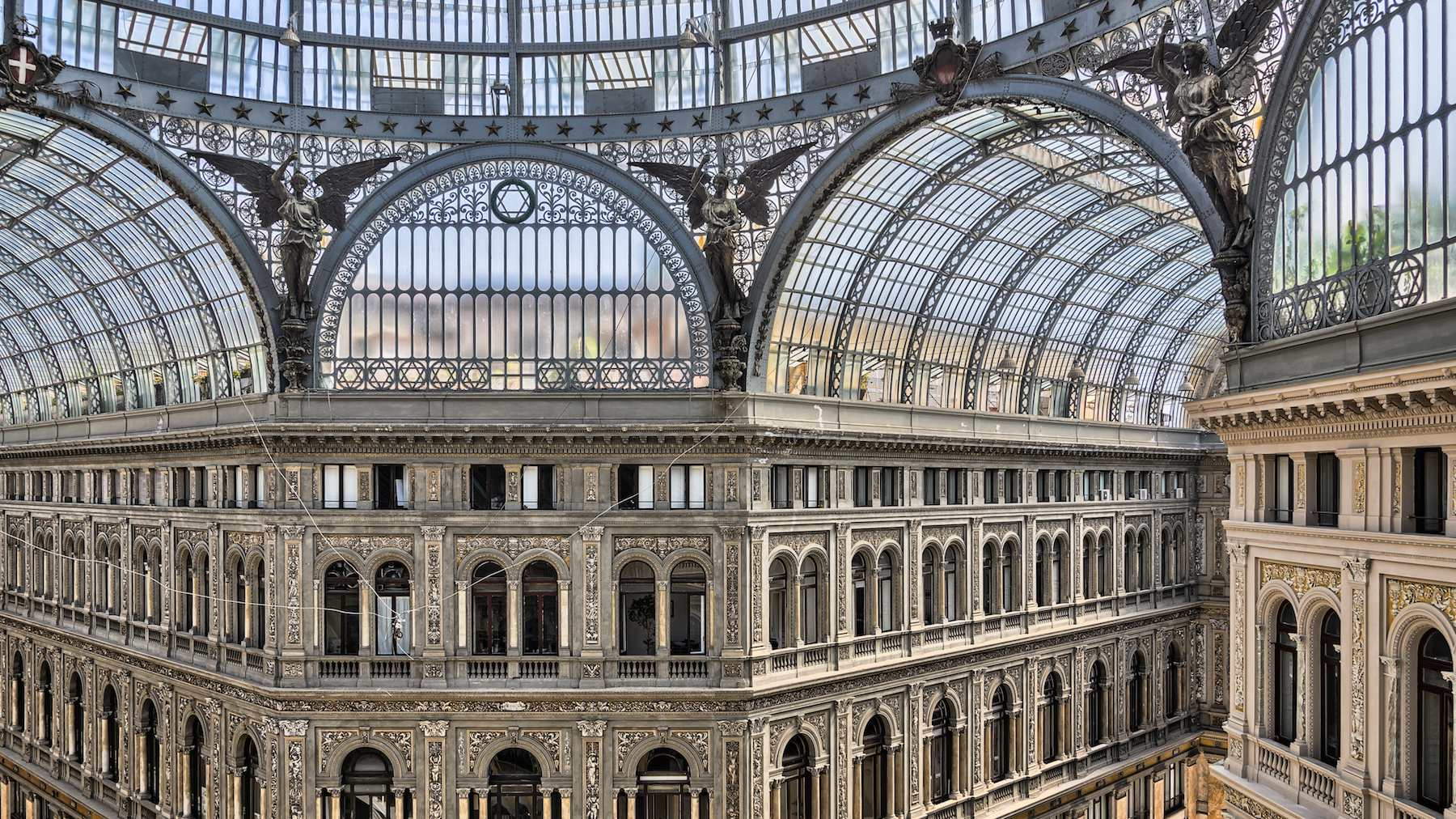
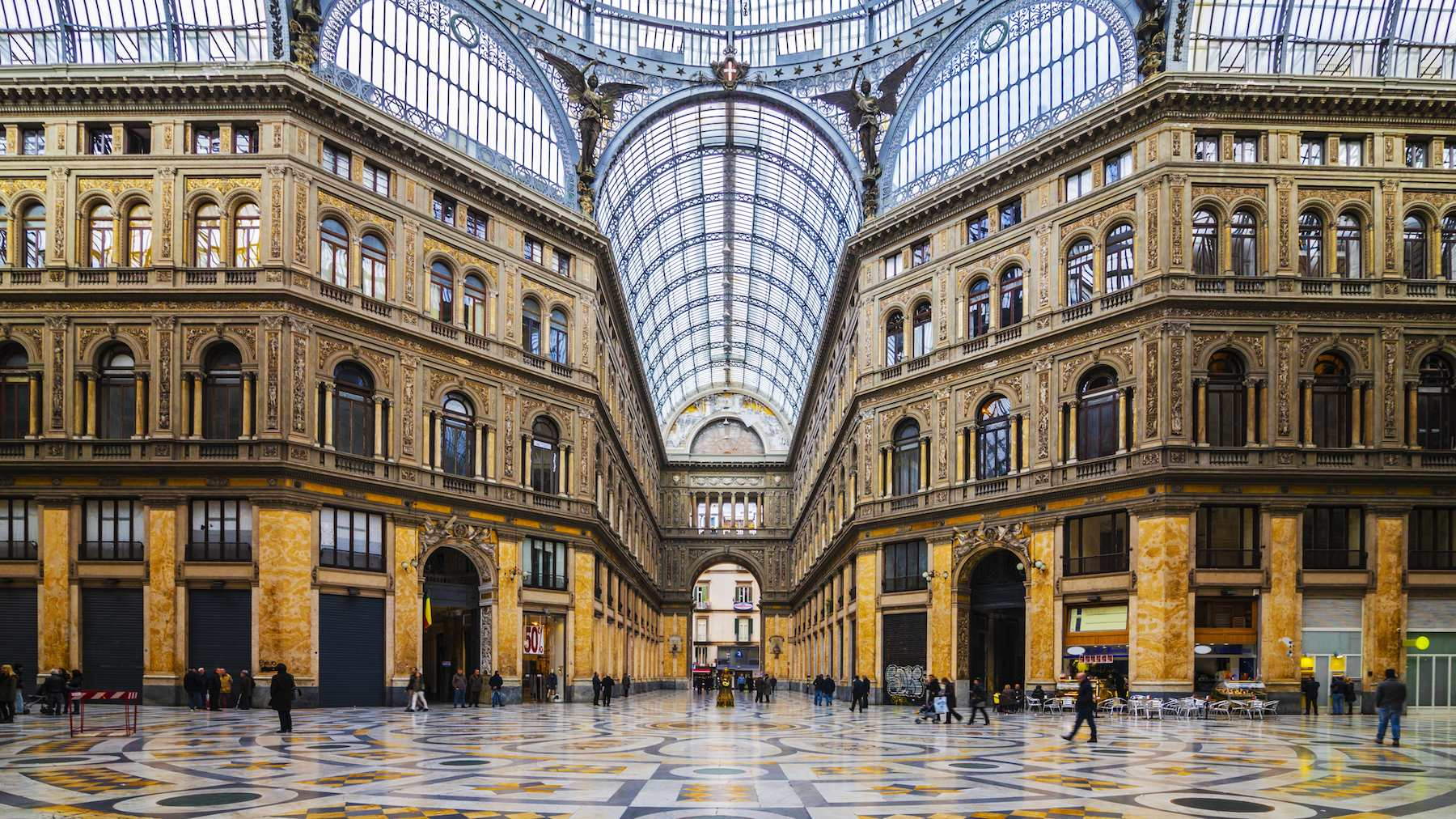
Opposite the San Carlo is the grandest interior in southern Italy, the Galleria Umberto I. This great glass-roofed arcade, perhaps the largest in the world, was begun in 1887, nine years after the Galleria Vittorio Emanuele in Milan.
The arcade is cross-shaped, with a pretty mosaic of the zodiac on the floor at the centre, and its arching dome is 184ft tall. The Neapolitans do not seem to like it as much as they once did: even at high noon, you are likely to find its vast spaces deserted but for a few small clouds of forceful, grey-suited men arguing politics around the entrances.

The Vesuvius
Until the earthquake of AD 62 and the eruption of AD 79 which buried Herculaneum and Pompeii, Vesuvius seemed extinct; its slopes were clothed with famous vines and woods.
By 1139, seven eruptions had been recorded. Then came a period of calm during which the slopes of the mountains were cultivated. On 16 December 1631 Vesuvius ha
The eruption of 1794 devastated Torre del Greco. The volcano had minor eruptions in 1858, 1871, 1872, from 1895 to 1899, 1900, 1903, 1904, a major eruption in 1906, 1929, and one in 1944 altering the shape of the crater. Since then, apart from brief activity linked with the 1980 earthquake, Vesuvius has emitted only a plume of smoke. A good road leads to a junction in the midst of lava flows. Take the left fork (car park a few kilometres futher on).
The path is an easy but most impressive climb up the volcano, scattered with cinders and lapilli. From the summit there is an immense panorama over the Bay of Naples with the Sorrento Peninsula in the south and Cape Miseno in the north. Beyond is the Gulf of Gaeta.
The crater affords an unforgettable sight for its sheer size and the sense of desolation on the slopes of the jagged walls, for the great yawning crater, which takes on a pink color in the sun, and for the spouting steam-jets.
Maschio Angioino
This imposing castle, surrounded by deep moats, was built in 1282 by Pierre de Chaulnes and Pierre d'Angincourt, the architects of Charles I of Anjou. It was modelled on the castle at Angers. A remarkable triumphal arc embellishes the entrances on the town side.
This masterpiece bearing sculptures to the glory of the House of Aragon, was built to designs by Francesco Laurana in 1467. Access to the Sala dei Baroni is via the staircase in the inner courtyard (at the far end on the left).
The fine vaulting is star shaped, formed by the tufa groins intersecting with other architectural features. The Cappella Palatina 14th Century features an elegant Renaissance doorway which was previously surmounted by Laurana's splendid Virgin now kept in the sacristy along with other works of the same artist.
Before reaching the theatre, you will see on the right the Galleria Umberto I built at the end of the 19thCentury. Note the fine dome in glass and iron, at the centre of the Greek cross.
Subcategories
They talked about us: